
To understand how to avoid keyword cannibalization, start with the purpose of each page rather than counting repeated words. Two pages can mention the same subject and still help different users. The useful question is whether they compete to answer the same need without offering a meaningful difference. A clear page map makes that decision easier before more content is published.
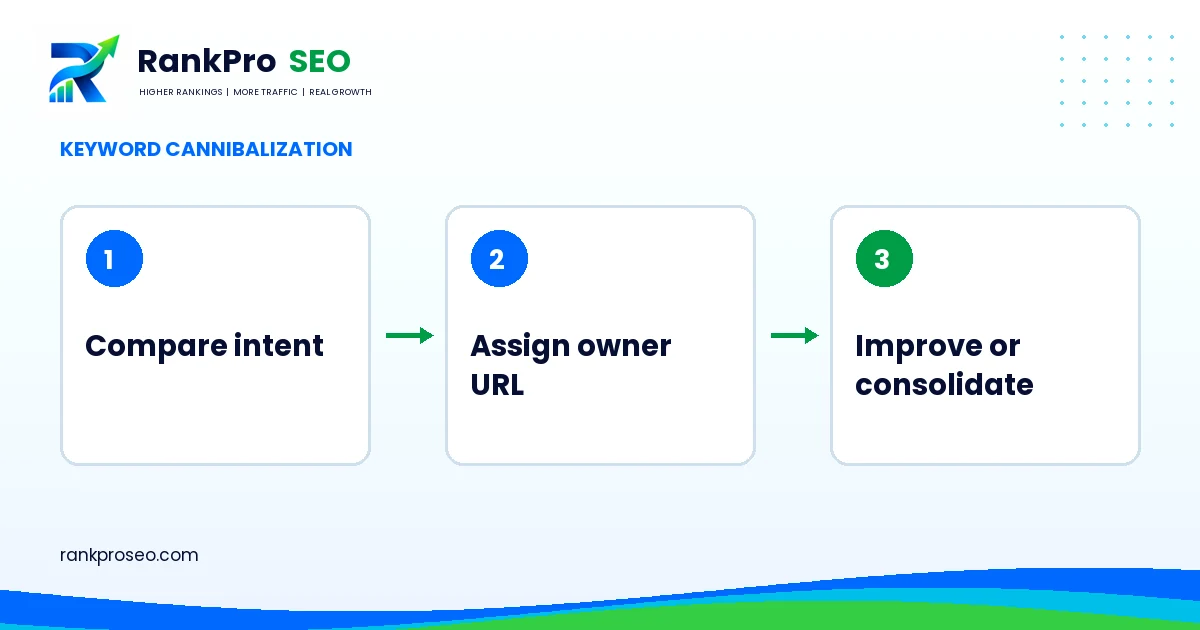
How to avoid keyword cannibalization: map the job of each URL
Create a simple inventory with the URL, page type, primary intent, main service or entity, next action and related pages. Identify the page you want to own each important user need. Supporting articles should answer the questions around that need and link to the owner when a reader is ready to explore the service.
For example, a local SEO service page explains what the engagement covers. A local SEO checklist helps a business review its own foundations. They can share terminology while doing different jobs. Two near-identical “New York local SEO company” pages with the same offer and CTA need a closer review.
Look for evidence before changing URLs
- Compare the actual content, headings and offers side by side.
- Review the search queries and landing pages involved, where reliable data is available.
- Look at the current result types for the query and the buyer question being answered.
- Check whether internal links consistently point to the intended owner page.
- Consider whether each page has useful independent demand or serves an existing customer journey.
Do not conclude that a problem exists merely because multiple pages appear for related queries. Search performance varies, and different pages can legitimately satisfy different interpretations. The diagnosis should identify the overlap and explain the practical downside, such as confusing navigation or duplicated sales copy.
Choose the smallest change that resolves the problem
| Situation | Possible action | Check afterward |
|---|---|---|
| Different intent, unclear framing | Improve the title, introduction and internal links | Readers can distinguish each page’s purpose |
| Same intent, one useful owner | Merge unique information and redirect an obsolete URL where appropriate | Links, redirects and final content work |
| Same topic, different audience | Keep separate pages with specific audience details | Each page has substantive differences |
| Duplicate URL versions | Review canonical and redirect signals | Preferred URLs are consistent across the site |
Canonicalization concerns selecting a representative URL among duplicate or very similar versions. Google can evaluate multiple signals and choose a different representative. It should not be treated as a way to make an unrelated or weak page useful. When removing a public URL, make an explicit decision about the destination and update internal links instead of leaving the old route to fail.
Build an editorial ownership sheet
Add one row for every planned page. Record the target question, the intended audience, the information that only this page will provide, the parent service and the CTA. Before approving a new brief, compare it with the existing inventory. If the only difference is word order or a city name, ask what additional user need the page serves.
A hypothetical example: “SEO services New York” and “New York SEO services” may support one broad service-discovery page. “What should an SEO audit include?” has a different research task. Keep the audit guide educational, then link to the audit service for help. This gives the two pages a clear relationship without repeating the full sales pitch.
What should an editor check before publication?
Read the introduction and headings without the keyword brief. Can you tell who the page is for, what it answers and why it exists? Follow its internal links and check whether the next destination makes sense. Remove repeated sections that belong on a parent service page and replace them with a short explanation and a relevant link. Keep enough context for the article to be useful on its own.
How do you know whether a consolidation worked?
Verify the redirect and destination content first. Then review relevant search observations and inquiry paths over appropriate comparison periods, taking seasonality and other changes into account. Keep a change log so a later reviewer understands what moved and why. No consolidation guarantees an improvement, so the decision should remain tied to evidence and user clarity.
Reference: Google’s canonicalization documentation. Practical worksheets and illustrative scenarios in this guide are RankProSEO’s planning recommendations, not published client results.